Yoga for Glutes and Hips: Build Strength Without Bulking
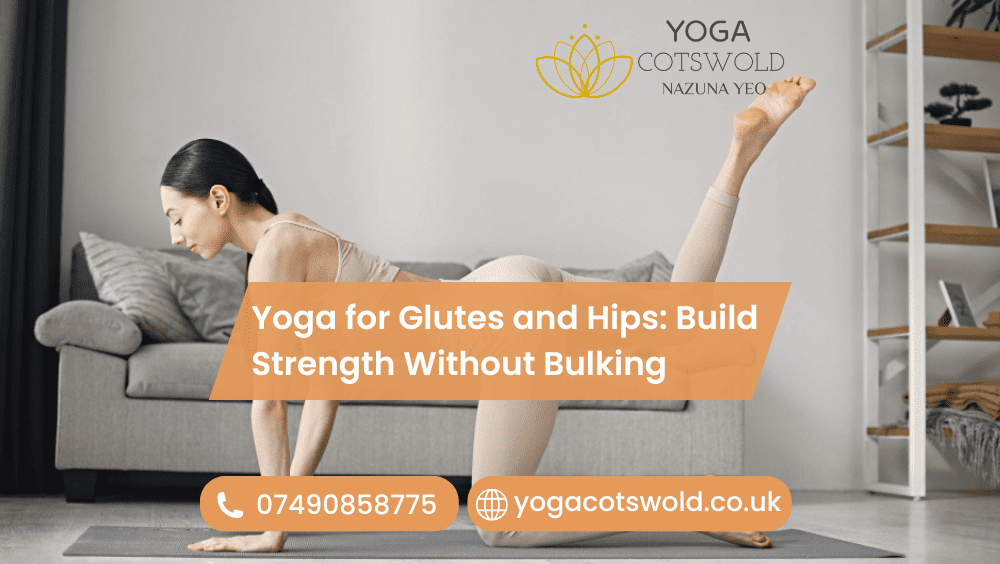
Yoga for Glutes and Hips: Build Strength Without Bulking: The pursuit of a toned, strong, and flexible body often leads many to focus on the glutes and hips. These areas not only contribute to aesthetics but play a pivotal role in overall movement, posture, and injury prevention. While many turn to weight training for strength, yoga offers a gentle yet effective alternative. Through specific yoga poses, you can strengthen the glutes and hips without adding unnecessary bulk. Whether you’re an avid yogi or a beginner, this article will guide you through how yoga can help you build strength in these critical areas while maintaining a lean physique.
The Importance of Glutes and Hips in Yoga
Before diving into specific poses, it’s important to understand why the glutes and hips are crucial in yoga practice. The glutes (comprising the gluteus maximus, medius, and minimus) play an essential role in stabilising the pelvis, supporting the lower back, and facilitating movement in the lower body. The hips, on the other hand, are the body's largest ball-and-socket joint and act as a key point of flexibility and mobility. Both areas contribute significantly to balance, alignment, and strength.
When these muscles are strong and flexible, they support your yoga poses with greater ease and precision. Additionally, strengthening the glutes and hips reduces the risk of injury, improves posture, and enhances overall stability, particularly during standing poses or inversions.
Yoga Poses for Glute and Hip Strength
Yoga offers a range of poses that specifically target the glutes and hips. These poses engage multiple muscle groups, promote flexibility, and strengthen without overbuilding or causing unnecessary bulk.
1. Warrior I (Virabhadrasana I)
Warrior I is a classic yoga pose that strengthens the legs, glutes, and hips. The deep lunge position activates the hip flexors, glutes, and quadriceps while stretching the hip flexors and hamstrings.
-
How to do it:
-
Start in a standing position, then step one foot back, bending the front knee at a 90-degree angle.
-
Keep your hips squared forward, press firmly into the back foot, and engage the glutes.
-
Extend your arms overhead and hold for 30 seconds, focusing on deep, controlled breathing.
-
By holding this pose, you activate the glute muscles of the back leg and engage the hips in stabilising the pelvis.
2. Bridge Pose (Setu Bandhasana)
Bridge pose is an excellent choice for building glute strength without overloading the muscles. This pose targets the gluteus maximus, hamstrings, and lower back while promoting hip flexibility.
-
How to do it:
-
Lie on your back with your knees bent and feet flat on the floor.
-
Press your feet into the mat, lift your hips, and squeeze your glutes as you raise your pelvis.
-
Keep your shoulders and head on the floor and hold the pose for 30 seconds to a minute.
-
Bridge pose helps engage the glutes, particularly in the lower back region, and opens up the hip flexors, improving overall hip mobility.
3. Chair Pose (Utkatasana)
Chair pose works the lower body muscles, including the glutes, quads, and hips. While the focus is primarily on strengthening the legs, this posture also activates the hip flexors and glutes to maintain balance.
-
How to do it:
-
Start by standing tall with your feet together.
-
Bend your knees as if sitting in an imaginary chair, reaching your arms overhead.
-
Engage your glutes and thighs, and make sure your knees do not extend past your toes.
-
Hold the position for 30 seconds, focusing on engaging your core and legs.
-
Chair pose is an excellent way to strengthen the glutes without the need for weights, providing a low-impact alternative to traditional strength training.
4. Pigeon Pose (Eka Pada Rajakapotasana)
Pigeon pose is a deep hip opener that targets the hip flexors, glutes, and the piriformis muscle. It helps release tension in the hips, which is vital for those who spend long hours sitting.
-
How to do it:
-
Begin in a tabletop position, then slide one knee forward towards your wrist while extending the other leg back.
-
Lower your hips towards the floor, keeping your back leg straight and your front leg bent at a right angle.
-
Lean forward to deepen the stretch, and hold for 30 seconds to one minute on each side.
-
This pose stretches the glutes and hip flexors deeply, providing relief from tension and increasing hip flexibility.
5. Locust Pose (Salabhasana)
Locust pose is an excellent way to build strength in the glutes and lower back. It targets the gluteus maximus, while also helping to improve posture by engaging the spine.
-
How to do it:
-
Lie face down on the floor with your arms extended by your sides.
-
Lift your chest, arms, and legs off the floor, engaging your glutes and lower back.
-
Hold for 20-30 seconds, keeping your neck long and your chest lifted.
-
Locust pose strengthens the glutes without putting undue strain on the hips, while also enhancing the strength of the spine.
Benefits of Yoga for Glute and Hip Strength
The benefits of focusing on the glutes and hips in your yoga practice go beyond just building muscle. Here are some of the key advantages:
1. Increased Flexibility
Yoga promotes increased flexibility, which helps prevent muscle tightness and joint stiffness, particularly in the hips. As you stretch and strengthen the muscles surrounding the hips and glutes, you’ll notice a reduction in tension and an improvement in mobility.
2. Improved Posture
A strong, stable pelvis supports the spine and improves overall posture. Strengthening the glutes and hips helps maintain better alignment during both yoga practice and daily activities, preventing slouching or lower back discomfort.
3. Enhanced Balance and Stability
The glutes and hips play a crucial role in stabilising the body during dynamic movements. A strong foundation in these areas improves your balance, making it easier to hold more complex yoga poses or engage in other physical activities.
4. Injury Prevention
Yoga enhances the strength and mobility of key muscle groups, which lowers the risk of injury, particularly in the lower back, hips, and knees. The improved flexibility and muscle engagement ensure that you can move more safely, reducing the likelihood of strain or discomfort.
Building Strength Without Bulking
One of the common misconceptions about strength training is that it inevitably leads to bulking or adding excessive muscle mass. However, yoga focuses on building functional strength rather than hypertrophy (muscle growth). By performing poses that engage the muscles in a controlled, mindful way, you can achieve a toned and strong physique without bulking up.
Additionally, the emphasis in yoga on breath control, body awareness, and alignment helps to avoid the risk of overtraining, which can sometimes lead to unnecessary muscle growth. Instead, yoga promotes lean muscle development and joint mobility.
Tips for Maximising Results
-
Consistency is Key: Like any fitness regimen, the benefits of yoga for glutes and hips will only manifest if practiced regularly. Aim for at least three to four sessions a week to see noticeable improvements in strength and flexibility.
-
Mindful Engagement: Focus on engaging the correct muscles during each pose. Rather than rushing through the postures, ensure you're consciously activating your glutes and hips to maximise the benefits.
-
Breathing Techniques: Proper breathing is crucial for maintaining strength and stability in yoga poses. Ensure you breathe deeply and steadily throughout each posture to avoid tension and support muscle engagement.
-
Complement with Other Activities: While yoga is excellent for strength and flexibility, complementing it with other forms of exercise, such as walking, swimming, or cycling, can help improve cardiovascular health and enhance overall body tone.
Conclusion
Incorporating yoga into your fitness routine is an excellent way to build glute and hip strength without adding bulk. The combination of flexibility, strength, and mindful movement makes yoga a fantastic practice for toning these key areas while improving your overall physical health. Through poses like Warrior I, Bridge, and Pigeon, you can achieve the strong, lean physique you desire without resorting to heavy lifting or high-impact exercises. Remember, the journey to strength is not just about muscle mass but about cultivating a balanced, mindful, and healthy body.
Social:
https://www.linkedin.com/feed/update/urn:li:activity:7406608459929915393
https://uk.pinterest.com/pin/1114711345286226783


Comments
Post a Comment