Yoga for Knee Pain: Strength Without Strain
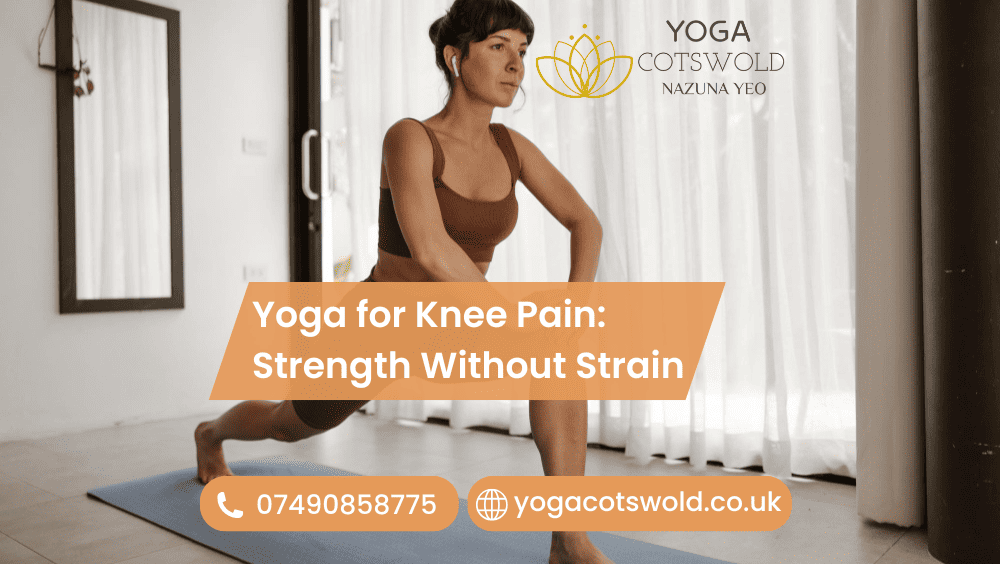
Yoga for Knee Pain: Strength Without Strain: Knee pain can significantly impact daily life, from climbing stairs to enjoying long walks. Fortunately, gentle yoga for knee pain offers a natural approach to strengthen muscles, improve flexibility, and reduce discomfort without strain. At Yoga Cotswold, I, Nazuna Yeo, guide students through mindful practices that protect the joints while building strength.
Understanding Knee Pain
Knee pain often arises due to overuse, injury, or age-related changes. Weak muscles around the knee, particularly in the quadriceps and hamstrings, can worsen discomfort. Additionally, poor posture or sudden activity can strain the joint. While medication and physiotherapy help, yoga offers a holistic approach that supports recovery and prevents further injury.
How Yoga Helps Knee Pain
Yoga for knee pain focuses on:
-
Strengthening muscles – Strong quads, glutes, and hamstrings help stabilise the knee.
-
Improving flexibility – Gentle stretches reduce tension in surrounding muscles.
-
Enhancing alignment – Correct posture prevents strain and supports long-term joint health.
-
Reducing inflammation – Mindful movements improve blood flow and decrease stiffness.
By practising specific asanas under expert guidance, like at Yoga Cotswold, students can safely engage their knees without overexertion.
Key Principles for Safe Practice
Before starting, consider these important principles:
-
Warm-up gently: Always prepare your knees with light stretches.
-
Avoid deep bends: Do not force the joint into uncomfortable positions.
-
Listen to your body: Discomfort is normal, but sharp pain is a warning.
-
Use props: Blocks, straps, or cushions can provide extra support.
Following these guidelines ensures that your yoga practice strengthens the knees without strain.
Recommended Yoga Poses for Knee Pain
Here are effective yoga poses for knee health:
1. Bridge Pose (Setu Bandhasana)
-
Strengthens glutes and hamstrings, supporting knee stability.
-
Lie on your back, bend knees, and lift hips while keeping feet hip-width apart.
-
Hold for 20–30 seconds, repeat 3 times.
2. Chair Pose (Utkatasana)
-
Activates quads and calves gently.
-
Stand with feet hip-width apart, bend knees slightly, and raise arms.
-
Avoid deep bends to prevent knee strain.
3. Leg Raises
-
Lie flat, lift one leg slowly to engage the quadriceps.
-
Maintain a neutral spine and avoid locking the knee.
4. Supported Hero Pose (Virasana) with Cushion
-
Opens the knees gently while stretching the quadriceps.
-
Sit on a cushion to relieve pressure on the joints.
5. Warrior II (Virabhadrasana II)
-
Strengthens leg muscles and improves balance.
-
Keep a slight bend in the front knee to avoid strain.
» Yoga for Your Baby: A Gentle Start to Wellness
» Importance of yoga practice in children
Tips to Maximise Benefits
-
Consistency is key: Practising 3–4 times per week provides noticeable improvements.
-
Focus on breath: Coordinating movement with breath reduces tension and promotes mindfulness.
-
Combine with low-impact exercises: Swimming or cycling complements yoga for knee health.
-
Maintain a healthy weight: Less stress on knees accelerates recovery.
Lifestyle Adjustments for Knee Health
Yoga works best alongside healthy lifestyle habits:
-
Balanced diet – Foods rich in omega-3, antioxidants, and calcium support joint health.
-
Proper footwear – Cushioned shoes reduce stress on knees.
-
Avoid prolonged sitting – Take breaks to stretch and strengthen muscles.
-
Sleep and recovery – Adequate rest allows muscles and joints to repair.
Common Mistakes to Avoid
Even with gentle yoga, beginners often make mistakes that worsen knee pain:
-
Locking the knees during poses
-
Ignoring discomfort or pushing beyond limits
-
Skipping warm-ups
-
Neglecting other supporting muscles
By staying mindful and following expert guidance, such as with Nazuna Yeo at Yoga Cotswold, students can safely strengthen knees without strain.
Conclusion
Yoga for knee pain is a safe, effective, and natural solution to strengthen joints, improve flexibility, and reduce discomfort. By following proper techniques, using props, and practising mindfully, students can regain mobility without strain.
At Yoga Cotswold, I, Nazuna Yeo, guide each student through gentle sequences tailored to individual needs. Whether you are a beginner or returning from injury, yoga can support long-term knee health and enhance overall wellbeing.
Social:
https://www.linkedin.com/feed/update/urn:li:share:7403667694610538496/


Comments
Post a Comment