Yoga for Lower Back Pain: A 15-Minute Daily Sequence
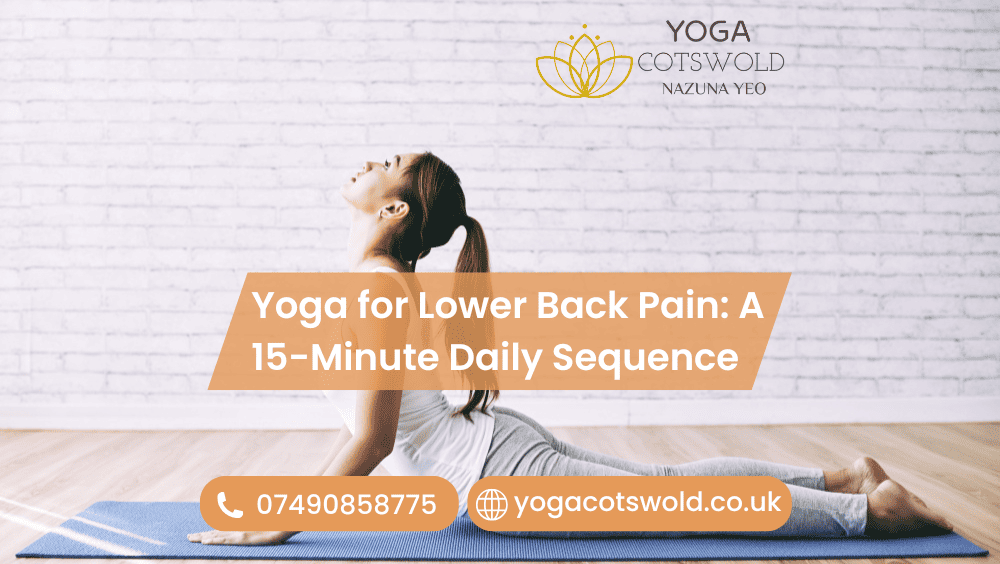
Yoga for Lower Back Pain: A 15-Minute Daily Sequence. In today’s fast-paced world, many of us spend hours sitting — at desks, in cars, or on the sofa scrolling through our phones. Over time, this sedentary lifestyle can lead to lower back pain, stiffness, and poor posture. It’s one of the most common physical complaints in adults, often caused by muscle imbalances, weak core support, or stress-related tension.
Fortunately, yoga offers an effective, natural way to ease back discomfort and build strength where it matters most. In just 15 minutes a day, you can loosen tight muscles, improve flexibility, and restore balance to your spine.
In this article, Nazuna Yeo from Yoga Cotswold shares a simple yet powerful 15-minute daily yoga sequence for lower back pain. Whether you’re a complete beginner or an experienced practitioner, these mindful movements can help you find comfort and strength in your body again.
Understanding Lower Back Pain
Before diving into the sequence, it helps to understand what’s really happening in your body. Your lower back supports most of your body weight and connects the upper and lower parts of your frame. When your posture weakens or certain muscles tighten, your spine compensates, leading to pain or stiffness.
Common causes include:
-
Prolonged sitting or poor posture
-
Weak core muscles
-
Tight hip flexors or hamstrings
-
Stress and shallow breathing
-
Lack of movement or mobility
Yoga works on all these factors simultaneously. Through gentle stretching, mindful breathing, and strengthening exercises, it helps realign the body and calm the mind — two crucial elements for lasting relief.
Why Yoga Helps with Back Pain
Unlike quick fixes, yoga for back pain focuses on both the physical and emotional aspects of discomfort. When practised consistently, it:
-
Improves flexibility in the spine and hips
-
Strengthens core muscles that support the lower back
-
Releases tension held in the shoulders and glutes
-
Promotes better posture and spinal alignment
-
Encourages relaxation through mindful breathing
The key is consistency. Just 15 minutes daily can lead to noticeable improvements within a few weeks.
Preparation Before You Begin
Find a quiet, comfortable space with enough room to move freely. Use a yoga mat and wear clothing that allows you to stretch easily.
Before starting, take a few deep breaths to centre yourself. This helps calm your nervous system and prepares your body for movement.
If you experience sharp pain at any point, stop immediately. Mild stretching discomfort is normal, but pain is a sign to rest or modify your posture.
The 15-Minute Daily Yoga Sequence for Lower Back Pain
This gentle yet effective sequence is designed to stretch, strengthen, and stabilise the muscles that support your spine. You’ll flow through each posture slowly, focusing on breath and alignment.
Cat-Cow Stretch (Marjaryasana-Bitilasana) – 2 minutes
Start on your hands and knees in a tabletop position.
-
Inhale as you arch your back, lifting your head and tailbone (Cow Pose).
-
Exhale as you round your spine, tucking your chin and tailbone (Cat Pose).
This movement increases spinal mobility and warms up the back muscles.
Child’s Pose (Balasana) – 2 minutes
From tabletop, bring your big toes together and knees wide apart. Sit back on your heels and stretch your arms forward. Rest your forehead on the mat.
Breathe deeply into your lower back. This pose gently releases tension in the lumbar area while calming the mind.
Downward-Facing Dog (Adho Mukha Svanasana) – 2 minutes
Lift your hips towards the ceiling, straightening your legs gently while pressing your palms into the mat. Keep your knees slightly bent if your hamstrings are tight.
This pose strengthens your shoulders, stretches your spine, and opens the back body.
Low Lunge (Anjaneyasana) – 2 minutes each side
Step your right foot forward between your hands, lowering your left knee to the ground. Keep your chest open and shoulders relaxed.
This stretch opens the hip flexors, which often tighten from sitting, pulling the lower spine into strain. Switch sides after two minutes.
Sphinx Pose (Salamba Bhujangasana) – 2 minutes
Lie on your stomach, place your elbows under your shoulders, and lift your chest gently. Keep your lower ribs on the mat and relax your shoulders.
This mild backbend strengthens the spinal muscles and improves posture without over-arching the lower back.
Supine Twist (Supta Matsyendrasana) – 2 minutes each side
Lie on your back with knees bent. Drop both knees to one side while keeping your shoulders grounded. Extend your opposite arm and gaze in the opposite direction.
This pose releases tension in the spine and lower back while stimulating digestion.
Bridge Pose (Setu Bandhasana) – 2 minutes
Lie on your back with knees bent and feet hip-width apart. Press through your heels to lift your hips, engaging your glutes and core.
This strengthens the lower back, glutes, and hamstrings, all essential for a healthy posture.
Supine Knees-to-Chest (Apanasana) – 1 minute
Finish by drawing both knees into your chest, wrapping your arms around your legs. Gently rock side to side to massage your lower back.
This restorative posture soothes tired muscles and signals your body to relax.
Related Post:
» How One-to-One Yoga Helps You Achieve Better Results
» Yoga for Your Baby: A Gentle Start to Wellness
» Importance of yoga practice in children
» Using Yoga to Manage Chronic Pain Without Medication
Breathing and Mindfulness
Throughout your practice, keep your breath slow and steady. Inhale through your nose and exhale fully through your mouth.
Breathing deeply improves oxygen flow and helps release physical and emotional tension — a major contributor to back discomfort.
At the end of your practice, spend a few moments lying quietly in Savasana (Corpse Pose). Allow your body to absorb the effects of your practice and let your mind settle.
Tips for Practising Safely
-
Always listen to your body.
-
Avoid forcing any stretch or pose.
-
Use props such as blocks or cushions if needed.
-
Warm up before intense movements.
-
Practise consistently — small, daily sessions are more effective than occasional long ones.
Consistency builds strength, flexibility, and awareness over time.
Lifestyle Habits That Support a Healthy Back
In addition to yoga, small changes in daily habits can make a huge difference.
-
Sit mindfully: Keep your feet flat on the floor and shoulders relaxed.
-
Take breaks: Stand and stretch every 30–40 minutes when working.
-
Strengthen your core: A strong core supports your spine naturally.
-
Sleep well: Use a supportive mattress and avoid sleeping on your stomach.
-
Stay active: Walk, swim, or cycle regularly to improve circulation.
These habits complement your yoga for lower back pain routine beautifully.
How Yoga Cotswold Can Help
At Yoga Cotswold, our mission is to help people move with ease and confidence. Under the guidance of Nazuna Yeo, each class is tailored to meet individual needs — from relieving lower back pain to improving overall mobility and balance.
Nazuna combines traditional yoga wisdom with modern anatomy to create safe, accessible, and effective practices. Whether you attend in-person sessions or online classes, you’ll receive personalised attention and practical advice to support your journey to better health.
Conclusion
Lower back pain doesn’t have to control your life. With mindful movement and daily dedication, you can build strength, release tension, and restore balance.
This 15-minute yoga sequence, shared by Nazuna Yeo from Yoga Cotswold, is a gentle yet powerful way to reconnect with your body. Through consistent practice, patience, and awareness, you’ll not only ease discomfort but also cultivate a sense of calm and resilience.
Remember — your body thrives on movement, your spine loves alignment, and your mind finds peace through breath.
Start today, and let your practice bring relief, freedom, and harmony into your life.
Social:
https://uk.pinterest.com/pin/1114711345284446923/
https://www.linkedin.com/feed/update/urn:li:activity:7392111995925213184


Comments
Post a Comment