Top Yoga Practices to Build Strength, Flexibility, and Focus
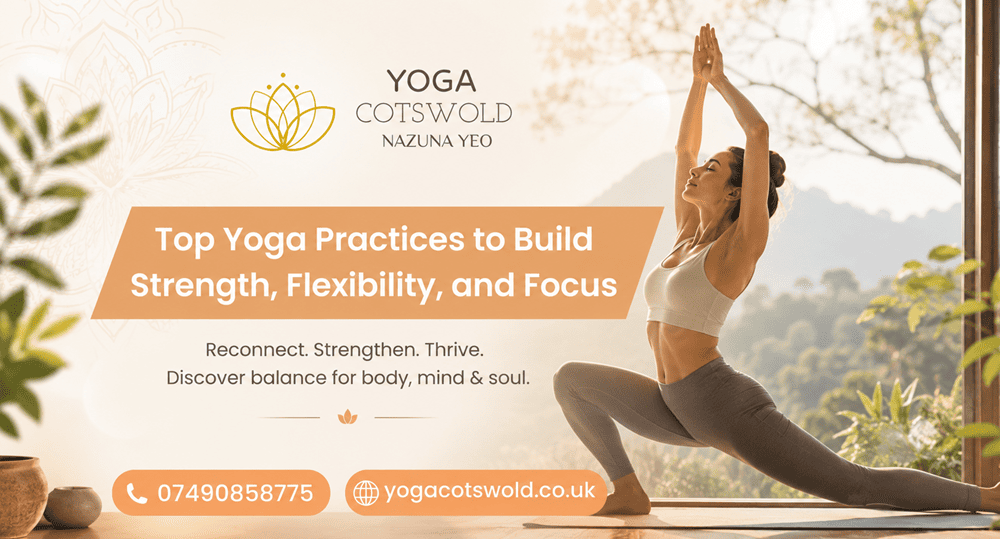
Top Yoga Practices to Build Strength, Flexibility, and Focus. Yoga offers far more than a good stretch. It helps the body feel stronger, the mind feel clearer, and everyday movement become more balanced. In a busy world where attention feels pulled in every direction, taking time to reconnect through movement can make a real difference.
At YOGA COTSWOLD, guided by yoga teacher NAZUNA YEO, students often arrive wanting one thing—perhaps more flexibility or a stronger core—and soon discover that yoga supports the whole person. Strength improves gradually, focus becomes steadier, and flexibility develops in a way that feels natural rather than forced.
The best part is that yoga doesn’t ask for perfection. It asks for presence. And over time, that simple practice creates meaningful change.
If you’re looking to improve both physical and mental wellbeing, these top yoga practices can help build strength, improve flexibility, and sharpen focus in a balanced and sustainable way.
Why Yoga Supports Strength, Flexibility and Focus Together
Many forms of exercise target one main goal. Yoga works differently.
Through mindful movement and controlled breathing, yoga trains the body and mind at the same time. While muscles strengthen through holding postures, joints begin to open and movement feels easier. Meanwhile, focused breathing helps calm the nervous system and improves concentration.
Here’s how yoga supports all three:
| Yoga Benefit | How It Helps |
|---|---|
| Strength | Builds muscle control and stability |
| Flexibility | Improves range of motion gradually |
| Focus | Encourages concentration and calm thinking |
| Balance | Connects body awareness and posture |
| Breathing | Supports energy and relaxation |
Because of this combination, yoga feels both grounding and energising.
1. Downward Facing Dog for Full-Body Strength
Downward Facing Dog is one of the most recognised yoga postures, and with good reason.
It strengthens:
- shoulders
- arms
- upper back
- legs
- core
At the same time, it stretches:
- hamstrings
- calves
- spine
Additionally, this pose encourages steady breathing and focus.
At YOGA COTSWOLD, NAZUNA YEO often teaches students to adjust this posture gently based on flexibility. That matters because every body feels different on different days.
Even holding it for a few breaths can feel powerful.
2. Warrior II for Stability and Confidence
Warrior II builds lower-body strength beautifully.
It targets:
- thighs
- hips
- glutes
- shoulders
Meanwhile, the posture invites mental steadiness.
You stay grounded through the legs while extending through the arms. Then the gaze remains fixed over the fingertips.
That combination strengthens both body and concentration.
Benefits include:
✔ improved leg endurance
✔ stronger posture
✔ greater body awareness
✔ improved focus
Also, there’s something quietly empowering about this pose.
3. Tree Pose for Balance and Concentration
Balance postures ask for full attention.
Tree Pose helps strengthen:
- ankles
- calves
- core
- hips
However, it also trains the mind.
If focus drifts, balance usually shifts too.
That’s why Tree Pose remains excellent for concentration.
Helpful tip:
Pick one still point in front of you and breathe naturally.
At first it may wobble—and that’s perfectly normal.
Actually, the wobble is part of the learning.
4. Cat-Cow Stretch for Flexibility and Mobility
Sometimes gentle movement helps more than deeper stretching.
Cat-Cow improves mobility through:
- spine
- shoulders
- neck
- hips
It also encourages awareness of breath.
Inhale through Cow Pose.
Exhale through Cat Pose.
That rhythm helps release tension and improves movement quality.
For many students, this practice feels especially helpful first thing in the morning.
5. Plank Pose for Core Strength
A strong core supports nearly every yoga posture.
Plank Pose strengthens:
| Area | Benefit |
|---|---|
| Core | Stability |
| Arms | Strength |
| Wrists | Endurance |
| Legs | Balance support |
| Back | Better posture |
It also improves concentration because holding the pose asks for presence.
Even a short hold counts.
Consistency matters more than duration.
6. Seated Forward Fold for Flexibility
Flexibility develops best with patience.
Seated Forward Fold stretches:
- hamstrings
- lower back
- calves
It also creates a calming inward focus.
There’s no need to force the body.
At YOGA COTSWOLD, NAZUNA YEO encourages students to breathe and soften gradually.
And often, flexibility improves more when effort feels steady rather than intense.
7. Child’s Pose for Focus and Recovery
Not every yoga practice needs intensity.
Child’s Pose offers:
✔ mental reset
✔ spinal release
✔ slower breathing
✔ recovery between poses
It encourages stillness.
And sometimes that pause helps focus more than movement.
Especially during a busy day.
Related Post:
How Often Should You Practise Yoga?
A simple routine works well.
Example weekly guide:
| Frequency | Benefit |
|---|---|
| 2 times weekly | Build consistency |
| 3–4 times weekly | Notice stronger progress |
| Daily short practice | Deepen flexibility and focus |
Even 10–15 minutes can feel worthwhile.
Regular practice matters far more than long sessions.
Why Practising with Guidance Helps
Yoga videos can be useful.
However, learning with an experienced teacher often brings deeper understanding.
At YOGA COTSWOLD, NAZUNA YEO supports students with:
- posture guidance
- breathing awareness
- thoughtful adjustments
- confidence building
- mindful progression
That support helps students practise safely while developing strength and flexibility naturally.
And honestly, shared practice can feel really encouraging too.
Conclusion
Yoga creates space to strengthen the body while calming the mind.
Through practices like Downward Facing Dog, Warrior II, Tree Pose, and Seated Forward Fold, students can build strength, improve flexibility, and develop clearer focus in a balanced way.
At YOGA COTSWOLD, NAZUNA YEO offers thoughtful yoga guidance in a welcoming environment where every student can move at their own pace.
And sometimes that’s what makes yoga feel so valuable—it meets you exactly where you are, then gently helps you move forward from there.
Social:
https://uk.pinterest.com/pin/1114711345295785883/
https://www.linkedin.com/feed/update/urn:li:share:7464535013603307521/


Comments
Post a Comment