Yoga vs Pilates: Which Is Better for Core Strength?
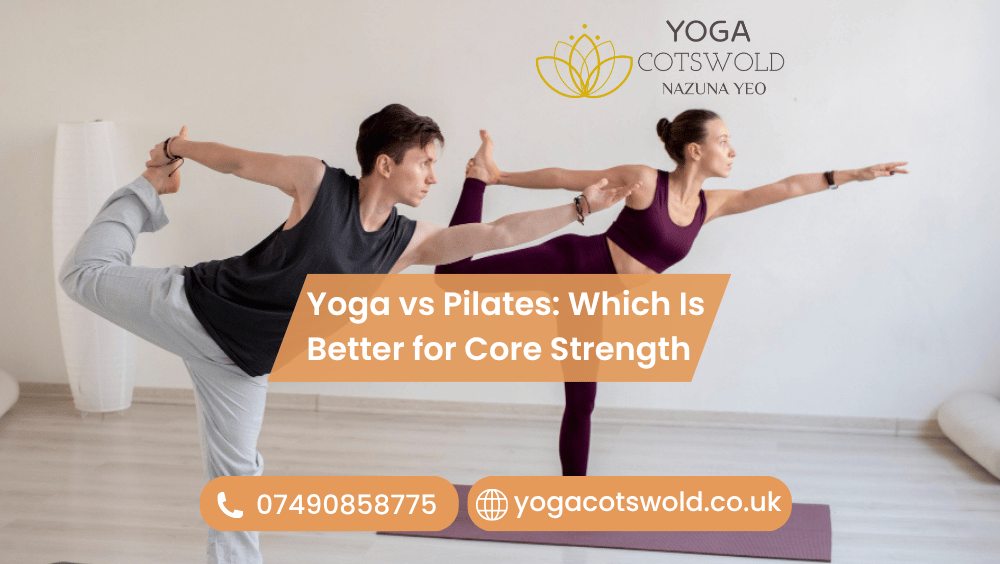
Yoga vs Pilates: Which Is Better for Core Strength?. These days, many people walk into the studio asking a very similar question: Yoga vs Pilates: which is better for core strength? It sounds like a simple comparison, yet the answer depends on your body, your goals, and even your daily routine. Some students want stronger abs quickly; meanwhile, others hope to improve posture, balance, or flexibility. Therefore, choosing between Yoga for core strength and Pilates for core stability requires a bit of understanding first.
At YOGA COTSWOLD, teacher NAZUNA YEO often reminds students that core strength is not just about appearance. Instead, it plays a vital role in everyday movement — from lifting shopping bags to sitting comfortably at a desk. Moreover, a strong core protects the spine and supports long-term mobility. So, rather than rushing into the trendiest workout, it makes sense to learn how each method truly works.
Interestingly, many people discover that both Yoga and Pilates complement each other rather nicely. Still, let’s explore the differences carefully before making that decision.
What Do We Mean by Core Strength?
Before comparing exercises, we should clarify what the “core” actually includes. Quite often, people imagine only the abdominal muscles. However, the core involves several important muscle groups working together.
Main Muscles That Form the Core
- Abdominal muscles
- Lower back muscles
- Pelvic floor muscles
- Hip stabilisers
- Diaphragm
Together, these muscles stabilise the body and maintain balance. For example, when you stand on one leg or reach for something on a high shelf, your core activates instantly. Consequently, weak core muscles may lead to poor posture, back discomfort, or even fatigue during simple tasks.
At YOGA COTSWOLD, beginners sometimes feel surprised when gentle exercises make them slightly tired. That reaction is completely normal, and it usually means the muscles are waking up after a long rest.
How Yoga Builds Core Strength Naturally
Yoga practice for beginners focuses on steady movement, mindful breathing, and body awareness. Unlike fast gym workouts, Yoga encourages controlled motion. Therefore, muscles engage deeply rather than quickly.
Ways Yoga Strengthens the Core
First, many Yoga poses require balance and stability. When you hold a pose, your body works hard to remain steady. Additionally, slow transitions between movements demand coordination, which strengthens the entire midsection.
Examples of Core-Focused Yoga Poses
- Plank Pose
- Boat Pose
- Downward Dog
- Warrior III
- Chair Pose
Moreover, Yoga improves flexibility alongside strength. This combination reduces the risk of injury and supports smoother movement. Some students notice better posture after only a few sessions, although results can vary slightly.
Another benefit worth mentioning is breathing. Controlled breathing helps the diaphragm and abdominal muscles work together, which naturally improves core muscle strength over time.
How Pilates Targets Core Stability
Pilates exercises for core strength take a slightly different approach. The method focuses strongly on controlled repetition and precise muscle engagement. Consequently, Pilates often isolates specific muscles more directly than Yoga.
Joseph Pilates originally developed the system for rehabilitation. Therefore, many exercises emphasise alignment and controlled breathing.
How Pilates Develops Core Strength
Pilates movements typically involve slow, repeated actions that keep the core engaged throughout the session. Furthermore, instructors encourage proper posture during every exercise. As a result, muscles become stronger and more stable.
Common Pilates Core Exercises
- The Hundred
- Leg Raises
- Roll-Up
- Side Kick
- Plank Hold
These exercises may feel challenging at first. However, regular practice usually leads to noticeable improvement within a few weeks.
Related Post:
Yoga vs Pilates: Key Differences for Core Strength
Although both practices strengthen the core, their styles differ slightly. Understanding those differences helps you select the best option for your needs.
Comparison Table: Yoga and Pilates
| Feature | Yoga | Pilates |
|---|---|---|
| Primary Goal | Balance and flexibility | Core stability and control |
| Movement Style | Flowing sequences | Structured repetitions |
| Breathing | Relaxed and rhythmic | Controlled and timed |
| Mental Focus | Mindfulness and relaxation | Concentration and precision |
| Equipment | Usually minimal | Sometimes uses equipment |
From this comparison, it becomes clear that both methods offer valuable benefits. Therefore, the question is not which one is better overall, but which one suits your personal goals.
Benefits of Yoga for Core Strength and Wellbeing
Many people choose Yoga because it supports both physical and mental health. Furthermore, the gentle nature of Yoga makes it suitable for nearly all age groups.
Advantages of Practising Yoga
- Improves posture and balance
- Enhances flexibility
- Reduces stress levels
- Strengthens deep core muscles
- Supports joint health
Additionally, Yoga encourages relaxation. After a long day, even a short session can help the body unwind. Some students mention sleeping better after evening classes, which is always a nice bonus.
Benefits of Pilates for Core Strength
On the other hand, Pilates remains a popular choice for individuals who want focused muscle training. Athletes, dancers, and office workers often benefit from its structured approach.
Advantages of Practising Pilates
- Builds strong abdominal muscles
- Improves body alignment
- Enhances muscle control
- Supports injury recovery
- Increases endurance
Moreover, Pilates exercises create measurable strength improvements. Many participants notice firmer muscles and improved posture relatively quickly.
Which Is Better for Beginners?
For beginners, the choice often depends on comfort level rather than fitness ability. Both methods can be adjusted to suit different experience levels.
Choose Yoga If You Prefer
- Gentle movement
- Relaxation and stress relief
- Improved flexibility
- A slower pace
Choose Pilates If You Prefer
- Structured routines
- Faster muscle strengthening
- Clear physical challenges
- Focused core training
At YOGA COTSWOLD, NAZUNA YEO usually encourages beginners to start with Yoga first. Later, they may add Pilates sessions for extra strength training. This gradual approach allows the body to adapt safely.
Can You Combine Yoga and Pilates for Better Results?
Yes, combining both methods often produces excellent results. In fact, many fitness experts recommend a balanced routine.
Sample Weekly Schedule
| Day | Activity |
|---|---|
| Monday | Yoga session |
| Wednesday | Pilates workout |
| Friday | Gentle Yoga practice |
| Sunday | Stretching or rest |
This routine keeps the body active without causing excessive strain. Furthermore, variety helps maintain motivation.
Tips for Improving Core Strength Safely
Regardless of which practice you choose, safety should remain the priority. Small adjustments can prevent injuries and improve results.
Helpful Safety Tips
- Warm up before exercising
- Maintain proper posture
- Breathe steadily
- Stay hydrated
- Rest when needed
Sometimes beginners feel tempted to push too hard. However, steady progress usually delivers better long-term results.
Role of an Experienced Instructor
Learning proper technique makes a significant difference in both Yoga and Pilates. An experienced instructor can correct posture and guide breathing patterns.
At YOGA COTSWOLD, NAZUNA YEO provides personalised guidance for each student. Moreover, she encourages a supportive environment where people feel comfortable asking questions.
Students often mention that clear instructions boost their confidence. That confidence helps them stay consistent with practice.
Conclusion
When considering Yoga vs Pilates for core strength, it becomes clear that both practices offer meaningful benefits. Yoga supports flexibility, balance, and relaxation, while Pilates provides targeted muscle strengthening and stability. Therefore, the best choice depends on your personal goals and lifestyle.
At YOGA COTSWOLD, under the guidance of NAZUNA YEO, students often discover that consistency matters more than intensity. Over time, regular practice builds strength, confidence, and better posture.
And truthfully, once your core feels stronger, everyday movements simply become easier — which is really what most people want in the end.
Social:
https://uk.pinterest.com/pin/1114711345292230864/
https://www.linkedin.com/feed/update/urn:li:share:7445008332798726144/


Comments
Post a Comment