Yoga for Stress Relief: Simple Routines
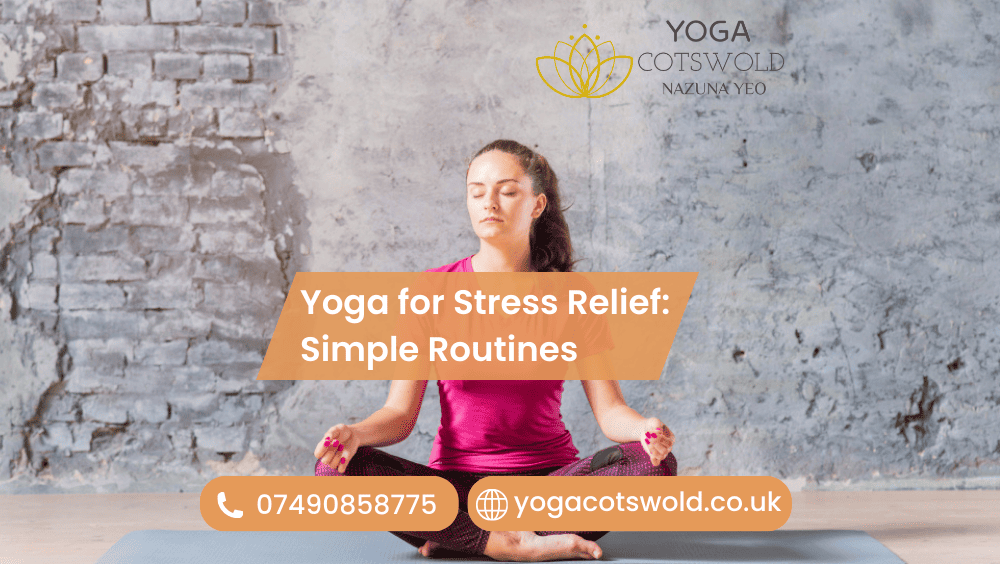
Yoga for Stress Relief: Simple Routines. Stress has quietly become part of everyday life. Whether it’s work pressure, constant notifications, or just the pace of modern living, the mind rarely gets a proper pause. However, there is a simple and natural way to manage this—yoga for stress relief.
At YOGA COTSWOLD, guided by Nazuna Yeo, the focus is not on perfection but on gentle, consistent practice. In fact, even a few minutes of daily movement and breathwork can shift how you feel. And honestly, you don’t need to be flexible or experienced to begin.
Why Yoga Helps Reduce Stress
To start with, yoga connects breath, body, and mind. As a result, it slows down your nervous system. When you practise regularly, your body moves from a “fight or flight” state into a more relaxed mode.
Moreover, mindfulness yoga encourages you to stay present. Instead of worrying about what’s next, you begin to focus on what’s happening now. Therefore, stress naturally starts to reduce.
Also, gentle stretches release tension stored in muscles. Many people carry stress in their shoulders or neck without even realising it. Yoga helps release that built-up tightness.
Creating a Calm Space for Practice
Before starting, it helps to create a peaceful environment. It doesn’t have to be perfect, though.
-
Choose a quiet corner
-
Use a yoga mat or soft surface
-
Keep lighting soft and comfortable
Additionally, practising at the same time each day builds consistency. Morning sessions feel refreshing, while evening routines help you unwind.
Simple Yoga Routine for Stress Relief
This routine is designed for beginners and can be completed in 15–20 minutes.
1. Deep Breathing (Pranayama) – 3 Minutes
Sit comfortably and focus on slow breathing.
-
Inhale through the nose
-
Exhale slowly
This simple step calms the mind quickly. Moreover, it prepares your body for movement.
2. Child’s Pose (Balasana) – 2 Minutes
This pose gently stretches the back and relaxes the body.
-
Kneel and fold forward
-
Rest your forehead on the mat
It creates a feeling of safety and comfort.
3. Cat-Cow Stretch – 3 Minutes
This flowing movement releases tension in the spine.
-
Inhale: lift chest and tailbone
-
Exhale: round your back
Therefore, it improves flexibility while calming the mind.
4. Standing Forward Fold – 2 Minutes
This pose helps reduce stress and fatigue.
-
Bend forward gently
-
Let your head relax
It also improves blood flow to the brain.
5. Legs-Up-the-Wall Pose – 5 Minutes
This is one of the most effective relaxation yoga poses.
-
Lie down with legs resting against a wall
-
Keep arms relaxed
As a result, your body feels lighter and calmer.
6. Final Relaxation (Savasana) – 5 Minutes
Lie flat and close your eyes.
-
Focus on your breath
-
Let your body fully relax
Although it looks simple, this step is powerful. It allows the body to reset.
Related Post:
Benefits of Practising Yoga Daily
Consistency makes all the difference. When you practise regularly, you may notice:
-
Reduced anxiety
-
Better sleep quality
-
Improved concentration
-
Increased emotional balance
Moreover, daily yoga practice supports both physical and mental health. Even on busy days, a short routine helps you stay grounded.
Comparing Stress Levels Before and After Yoga
| Aspect | Before Yoga Practice | After Regular Practice |
|---|---|---|
| Mental Clarity | Low | Improved |
| Muscle Tension | High | Reduced |
| Sleep Quality | Disturbed | Better |
| Energy Levels | Inconsistent | Balanced |
So, even simple routines can create noticeable change over time.
Tips to Stay Consistent
Starting is easy, but staying consistent can be tricky.
-
Begin with short sessions
-
Don’t aim for perfection
-
Listen to your body
-
Follow guided sessions
At YOGA COTSWOLD, Nazuna Yeo often reminds students that progress is not about doing more, but about showing up regularly. And yeah, some days will feel easier than others—that’s completely normal.
Common Mistakes to Avoid
Even though yoga is gentle, small mistakes can affect your experience.
-
Holding your breath
-
Forcing difficult poses
-
Skipping relaxation
-
Comparing yourself to others
Therefore, always focus on comfort and awareness rather than performance.
When to Practise Yoga for Best Results
There is no perfect time, but certain moments work better:
-
Morning: boosts energy and focus
-
Evening: reduces stress and promotes sleep
However, the best time is the one you can stick to consistently.
Conclusion
Stress may be unavoidable, but managing it is within your control. Through yoga for stress relief, you create space to breathe, move, and reconnect with yourself.
At YOGA COTSWOLD, under the guidance of Nazuna Yeo, the approach stays simple and accessible. You don’t need long hours or advanced skills—just a willingness to begin.
And honestly, once you start, you might realise that a few quiet minutes each day can make a bigger difference than expected.
Social:
https://uk.pinterest.com/pin/1114711345291323671/
https://www.linkedin.com/feed/update/urn:li:share:7439933296270241793/


Comments
Post a Comment