Essential Yoga Tips for Better Posture and Core Stability
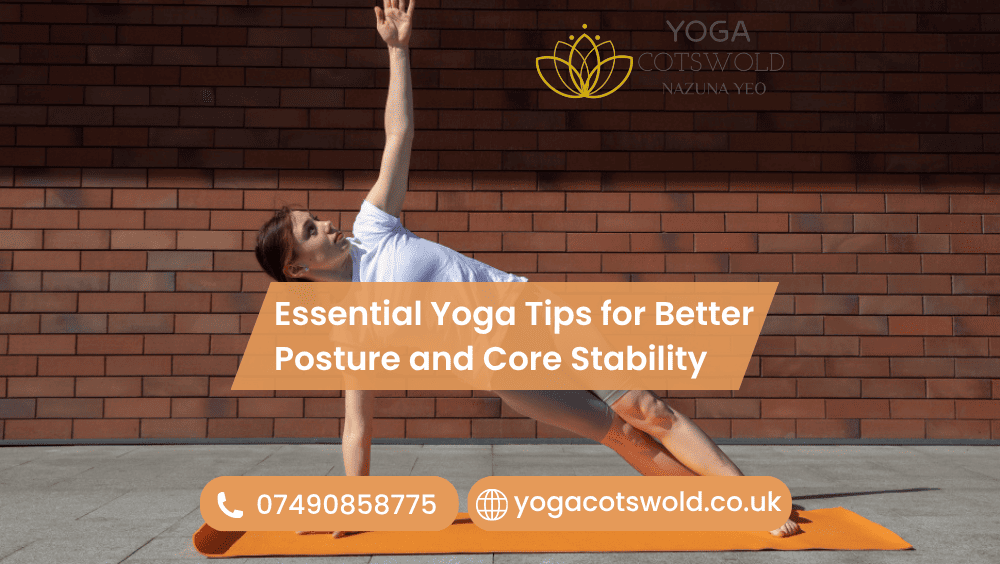
At YOGA COTSWOLD, under the guidance of NAZUNA YEO, we focus on simple yet powerful techniques that bring lasting change. So, whether you are a beginner or someone returning to practice, these essential yoga tips will help you develop strength, awareness, and balance.
Why Posture and Core Stability Matter
To begin with, posture is more than just appearance. It directly affects breathing, digestion, and even mood. Meanwhile, a strong core supports the spine and prevents injuries.
Moreover, when your core muscles—including the abdominals, lower back, and pelvic floor—work efficiently, your body moves with ease. As a result, daily tasks become less tiring and more fluid.
1. Start with Body Awareness
Before diving into poses, it is crucial to understand your current posture. Stand in front of a mirror and observe your alignment.
- Are your shoulders rounded?
- Is your head leaning forward?
By noticing these patterns, you can consciously correct them. Additionally, mindful awareness during yoga enhances results over time.
2. Focus on Breath Control
Breathing plays a key role in yoga for core strength. Deep, controlled breathing activates the inner core muscles.
For instance:
- Inhale deeply through the nose
- Exhale slowly while engaging your abdomen
Consequently, this practice improves both stability and relaxation. Furthermore, it keeps you present during each movement.
3. Strengthen Your Core with Foundational Poses
To build core stability, include these essential poses in your routine:
Plank Pose (Phalakasana)
This pose engages the entire core while strengthening shoulders and arms.
Boat Pose (Navasana)
It directly targets abdominal muscles and improves balance.
Bridge Pose (Setu Bandhasana)
In addition, it strengthens the lower back and glutes.
Practising these regularly will gradually enhance your strength. However, maintain proper alignment to avoid strain.
4. Improve Posture with Alignment-Based Poses
Certain poses specifically correct posture. Therefore, include them consistently:
- Mountain Pose (Tadasana) – promotes upright alignment
- Cobra Pose (Bhujangasana) – opens the chest and strengthens the spine
- Cat-Cow Stretch – increases spinal flexibility
As a result, your body becomes more aligned and less stiff.
5. Engage the Core in Every Pose
One common mistake is relaxing the core during yoga. Instead, gently engage your abdominal muscles in each pose.
For example, while standing or balancing, draw your navel slightly inward. This action stabilises your body and protects your lower back.
6. Practise Consistency Over Intensity
Although advanced poses look impressive, consistency matters more. Even 15–20 minutes of daily yoga practice for posture can bring noticeable changes.
Moreover, regular practice builds muscle memory. Over time, good posture becomes natural rather than forced.
7. Incorporate Balance Training
Balance poses improve coordination and core strength simultaneously.
Try:
- Tree Pose (Vrikshasana)
- Warrior III (Virabhadrasana III)
These poses challenge stability. Consequently, they activate deeper core muscles that are often neglected.
8. Stretch Tight Muscles
While strengthening is important, flexibility should not be ignored. Tight muscles, especially in the chest and hips, pull your body out of alignment.
Therefore, include stretches such as:
- Chest openers
- Hip flexor stretches
This combination ensures balanced muscle development.
9. Maintain Proper Sitting Habits
Yoga does not end on the mat. In fact, your daily habits matter just as much.
- Sit with a straight spine
- Keep feet flat on the floor
- Avoid slouching
Additionally, take breaks every hour to stretch and reset your posture.
Related Post:
10. Seek Guidance from an Experienced Teacher
Finally, practising under expert supervision ensures safety and effectiveness. At YOGA COTSWOLD, NAZUNA YEO provides personalised guidance tailored to individual needs.
This approach not only prevents injury but also accelerates progress.
Common Mistakes to Avoid
Even with the best intentions, mistakes can slow your progress. Therefore, avoid the following:
- Holding your breath during poses
- Overarching the lower back
- Rushing through movements
- Ignoring discomfort or pain
Instead, move mindfully and listen to your body.
Benefits of Yoga for Posture and Core Stability
With regular practice, you will notice several improvements:
- Better spinal alignment
- Reduced back and neck pain
- Increased strength and flexibility
- Enhanced confidence and body awareness
Ultimately, yoga creates a balanced and resilient body.
Conclusion
To sum up, improving posture and building core strength does not require complicated routines. With consistent effort, mindful breathing, and proper alignment, you can achieve lasting results.
At YOGA COTSWOLD, NAZUNA YEO encourages a holistic approach. Therefore, by integrating these essential yoga tips, you will not only stand taller but also feel stronger and more energised every day.


Comments
Post a Comment