Daily Yoga Routine for Stress Relief and Inner Peace
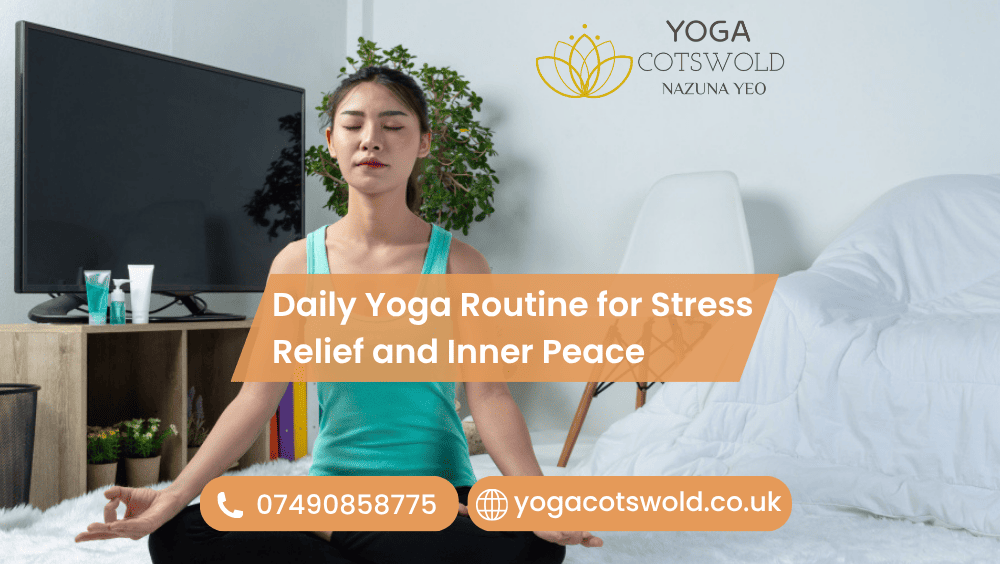
Daily Yoga Routine for Stress Relief and Inner Peace. Life moves quickly these days, and many people feel pressure from work, family, and daily responsibilities. As a result, stress builds up quietly, and sometimes we do not even notice until our body starts to feel tired or tense. However, practising a daily yoga routine can change that pattern in a gentle yet powerful way. Not only does yoga support physical health, but it also helps calm the mind and restore emotional balance.
At YOGA COTSWOLD, experienced teacher NAZUNA YEO guides students through mindful movements and breathing exercises designed to promote stress relief and inner peace. Her teaching style feels warm, practical, and welcoming, so beginners often feel comfortable from the very first session. Moreover, regular practice builds confidence, improves flexibility, and strengthens the connection between body and mind.
Why a Daily Yoga Routine Matters
First of all, consistency plays a key role in wellness. When you practise yoga daily, even for a short time, your body adapts and responds positively. Furthermore, routine creates structure, which helps reduce anxiety and improve focus.
Key benefits of a daily yoga routine include:
- Improved flexibility and posture
- Reduced muscle tension
- Better sleep quality
- Increased mental clarity
- Enhanced emotional balance
Additionally, yoga encourages mindful breathing, which slows the heart rate and lowers stress hormones. Therefore, people often feel calmer after just a few sessions. It may feel small at the start, but over time the changes become noticeable.
How Yoga Supports Stress Relief Naturally
Stress affects both the body and the mind. For instance, tight shoulders, headaches, and fatigue often appear when stress levels rise. However, yoga provides a natural solution without medication.
Yoga helps relieve stress through:
- Deep breathing techniques
- Gentle stretching movements
- Mindful awareness
- Relaxation practices
- Controlled body movements
Moreover, breathing exercises send signals to the nervous system, telling the body to relax. Consequently, tension reduces, and the mind becomes clearer. Many students at YOGA COTSWOLD say they feel lighter and more focused after each class, even on busy days.
Morning vs Evening Yoga: Which Works Best?
Choosing the right time for yoga depends on personal lifestyle. Some people prefer early morning sessions, while others feel more relaxed practising in the evening. Both options offer benefits, so the decision often comes down to preference.
Comparison of Morning and Evening Yoga
| Time of Practice | Main Benefit | Best For |
|---|---|---|
| Morning Yoga | Boosts energy | Busy professionals |
| Afternoon Yoga | Improves focus | Remote workers |
| Evening Yoga | Promotes relaxation | Stress relief before sleep |
Nevertheless, many beginners start with morning yoga because it sets a positive tone for the day. On the other hand, evening practice helps release tension built up during work hours.
Related Post:
Simple Daily Yoga Routine for Beginners
Starting yoga does not require complicated poses or long sessions. In fact, a short routine of 15 to 20 minutes can bring noticeable results. Below is a gentle beginner-friendly sequence often recommended by NAZUNA YEO.
Step-by-step daily yoga routine:
- Deep breathing – 2 minutes
- Neck and shoulder stretches – 3 minutes
- Cat-Cow pose – 3 minutes
- Downward Dog pose – 4 minutes
- Child’s pose relaxation – 3 minutes
- Mindful breathing – 5 minutes
Furthermore, this routine requires minimal equipment. A simple yoga mat and comfortable clothing are usually enough. Some people practise at home, while others prefer group sessions for motivation and guidance.
How Long Does It Take to Feel Results?
Many beginners ask how quickly they will notice improvements. The answer varies, yet small changes often appear within the first few weeks.
Typical Yoga Progress Timeline
| Practice Duration | Expected Changes |
|---|---|
| 1 Week | Reduced tension and better mood |
| 2–3 Weeks | Improved flexibility |
| 1 Month | Better sleep and energy levels |
| 3 Months | Stronger muscles and mental clarity |
Therefore, patience and consistency remain essential. Even if progress feels slow at the start, regular practice builds lasting benefits.
Creating a Peaceful Yoga Environment at Home
A calm environment helps deepen relaxation and focus. Fortunately, setting up a simple yoga space does not require much effort or money.
Tips for creating a peaceful yoga space:
- Choose a quiet room or corner
- Keep the area clean and uncluttered
- Use soft lighting or candles
- Play gentle music if desired
- Maintain fresh air circulation
Additionally, practising in the same space each day builds a sense of routine. Over time, the mind begins to associate that space with calmness and comfort.
The Role of Breathing in Achieving Inner Peace
Breathing sits at the heart of yoga practice. While many people breathe quickly during stressful moments, slow breathing restores balance. Therefore, learning proper breathing techniques becomes essential for inner peace.
Benefits of mindful breathing:
- Reduces anxiety
- Improves concentration
- Enhances emotional stability
- Supports heart health
- Encourages relaxation
Moreover, controlled breathing increases oxygen flow to the brain. As a result, the body feels more energised, and the mind becomes clearer.
Why Choose YOGA COTSWOLD for Your Yoga Journey
Choosing the right yoga teacher makes a big difference. At YOGA COTSWOLD, NAZUNA YEO focuses on personalised guidance and supportive instruction. Her sessions welcome beginners and experienced practitioners alike.
Reasons students trust this yoga studio:
- Friendly and inclusive atmosphere
- Structured beginner programmes
- Small group classes for better attention
- Emphasis on safety and comfort
- Flexible scheduling options
Furthermore, students often mention that classes feel relaxed rather than competitive. That supportive environment encourages steady progress and confidence.
Common Mistakes Beginners Should Avoid
Starting yoga feels exciting, yet beginners sometimes rush or push themselves too hard. Consequently, discomfort or frustration may follow. However, avoiding a few simple mistakes can make practice more enjoyable.
Mistakes to watch out for:
- Skipping warm-up exercises
- Holding breath during poses
- Practising without proper guidance
- Comparing progress with others
- Ignoring body signals
Instead, listen to your body and move at a comfortable pace. Progress happens naturally when patience and consistency guide the journey.
Conclusion
A daily yoga routine offers a simple yet powerful path toward stress relief and inner peace. Through steady practice, the body grows stronger, the mind becomes calmer, and daily challenges feel more manageable. Even a short session can create meaningful change when done consistently.
At YOGA COTSWOLD, teacher NAZUNA YEO supports students with gentle guidance and practical techniques that fit modern lifestyles. Therefore, whether you are new to yoga or returning after a break, starting today can make a positive difference. Small steps, practised daily, often lead to lasting wellbeing — and honestly, that’s what many people are searching for.
Social:
https://uk.pinterest.com/pin/1114711345291783165/
https://www.linkedin.com/feed/update/urn:li:share:7442430354591784960/


Comments
Post a Comment