Yoga for Flexibility: Split Training Without Overstretching
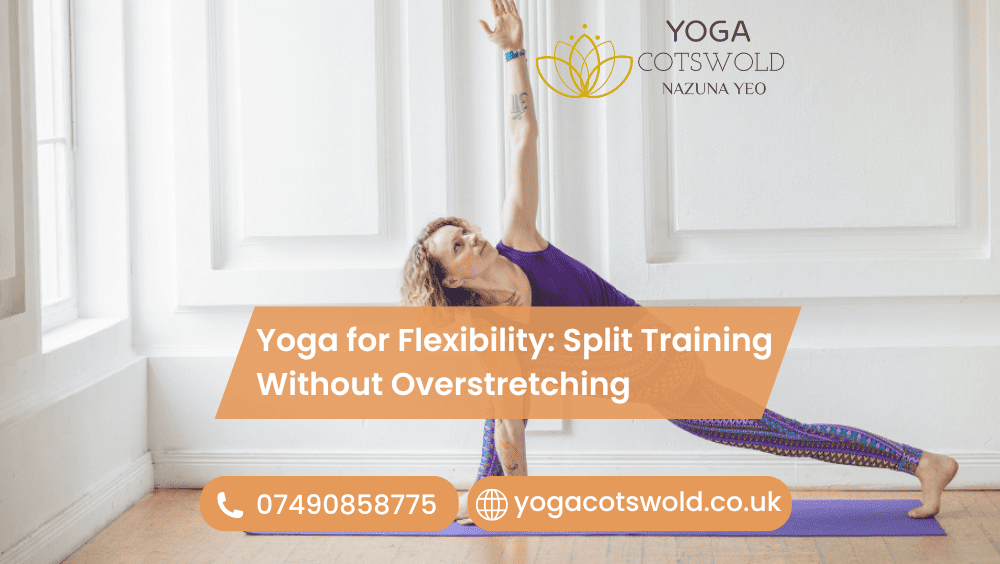
At YOGA COTSWOLD, I often remind students that the goal is not simply to “get the splits”. Instead, the goal is to build a healthy, balanced body that moves well and feels strong. Therefore, learning yoga for flexibility should always focus on safe progress, mindful stretching, and proper technique.
In this guide, I will explain how to train for the splits using yoga principles while avoiding one of the biggest mistakes people make: overstretching.
Why Flexibility Matters (Beyond the Splits)
Flexibility is often misunderstood. Many people assume it is only about stretching the legs further. However, true flexibility also includes joint stability, muscle control, and mobility through a safe range of motion.
When you practise yoga for flexibility, you are not only lengthening muscles. Instead, you are improving circulation, calming the nervous system, and building body awareness. As a result, you may notice:
-
reduced stiffness in hips and hamstrings
-
better posture
-
improved walking and running mechanics
-
less lower back tension
-
increased comfort in daily movement
Additionally, flexibility training can help you feel more confident in your body. Therefore, even if you never achieve a full split, the benefits remain powerful.
What Are the Splits, Really?
The splits are not just one pose. In yoga and flexibility training, we generally talk about two main types:
1. Front Splits (Hanumanasana)
This is the classic split position where one leg extends forward and the other stretches behind.
2. Side Splits (Straddle Split)
This involves opening both legs out to the sides, often linked to poses like Upavistha Konasana.
Although both require flexibility, the muscles involved are slightly different. Therefore, your training should match your goal.
For front splits, you need flexibility in:
-
hamstrings
-
hip flexors
-
quadriceps
-
glutes
Meanwhile, side splits require:
-
inner thighs (adductors)
-
hip joint mobility
-
glute and groin flexibility
Why People Overstretch (And Why It’s So Common)
Overstretching happens when you push beyond what your tissues can safely handle. Unfortunately, many people do this because they assume pain equals progress.
However, in flexibility training, pain is often a warning sign, not a success marker.
People overstretch because:
-
they compare themselves to others
-
they skip warm-ups
-
they force the pose too quickly
-
they “bounce” in stretches
-
they ignore joint alignment
-
they stretch when tired or cold
Additionally, social media can create unrealistic expectations. As a result, students often feel pressured to achieve advanced poses quickly.
At YOGA COTSWOLD, we approach flexibility differently. We practise with patience, breath, and respect for the body. Therefore, progress becomes sustainable and safe.
Signs You Are Overstretching During Split Training
Your body communicates clearly when you listen. Therefore, learning the warning signs can prevent injury.
Common signs of overstretching include:
-
sharp or stabbing pain
-
tingling or numbness
-
pain in the knee joint rather than the muscle
-
feeling “unstable” or wobbly in the hips
-
pulling sensation in the groin that feels too intense
-
pain that lingers for days
However, mild discomfort in a muscle stretch is normal. The key is that it should feel like a strong stretch, not a strain.
If your body feels worse after your practice, it is a clear sign you need to adjust your approach.
The Golden Rule: Warm Up First, Always
One of the biggest mistakes in flexibility training is stretching cold muscles. Muscles respond better when warm because blood flow increases and tissues become more elastic.
Therefore, before doing any split training, include at least 5–10 minutes of warm-up movement.
Effective warm-ups for split training include:
-
Cat-Cow stretches
-
Sun Salutations
-
Low lunges with gentle pulses
-
Leg swings
-
Hip circles
-
Light squats
Additionally, breathwork can help calm the nervous system. As a result, your muscles relax naturally.
Yoga Poses for Safe Split Training
Now let’s explore the most effective yoga poses to build flexibility without pushing too far.
1. Downward Facing Dog (Adho Mukha Svanasana)
This pose lengthens the hamstrings and calves while strengthening the shoulders and core.
Tip: Bend your knees slightly if your hamstrings feel tight. Therefore, you can protect your lower back.
2. Low Lunge (Anjaneyasana)
Low lunge stretches the hip flexors, which are essential for front splits.
Tip: Keep your hips square. Otherwise, you may twist into the pose and lose balance.
3. Half Splits (Ardha Hanumanasana)
This is one of the best poses for hamstring flexibility. Additionally, it teaches you to lengthen safely without dropping into the full split too soon.
Tip: Use blocks under your hands. As a result, your spine stays long and supported.
4. Pigeon Pose (Eka Pada Rajakapotasana)
Pigeon opens the glutes and outer hips. Therefore, it helps reduce tightness that can limit split depth.
Tip: If your hips lift unevenly, use a cushion under the hip for support.
5. Lizard Pose (Utthan Pristhasana)
Lizard is intense, yet extremely effective for hip mobility.
However, you should move slowly and breathe deeply. Otherwise, the body will tense up.
6. Bridge Pose (Setu Bandhasana)
Many people forget that back-body strength supports flexibility. Bridge pose strengthens glutes and opens the hip flexors, making it excellent for splits.
Strength Matters More Than You Think
Many students focus only on stretching. However, flexibility without strength can lead to injury.
When you train for the splits, your muscles must learn to support the range of motion. Therefore, strength-based yoga poses become essential.
Key strengthening poses include:
-
Chair Pose (Utkatasana)
-
Warrior II (Virabhadrasana II)
-
Crescent Lunge
-
Plank and Side Plank
-
Locust Pose (Salabhasana)
Additionally, strengthening your core improves pelvic stability. As a result, your hips remain aligned during deep stretching.
How Often Should You Practise Split Training?
Many people assume daily stretching is the fastest route. However, your body needs recovery time.
Ideally, practise split-focused training:
-
3 to 5 times per week
-
with gentle mobility on rest days
-
and at least one full rest day weekly
Consistency matters, but so does recovery. Therefore, balance is key.
Additionally, short sessions (15–25 minutes) often work better than long intense sessions. That way, your muscles adapt gradually.
The Role of Breath in Flexibility
Breath is not just a yoga concept. It is a practical flexibility tool.
When you breathe slowly, your nervous system shifts into relaxation mode. As a result, muscles stop resisting the stretch.
Try this breathing method:
-
Inhale slowly through the nose for 4 seconds
-
Exhale for 6 seconds
-
Repeat for 5–10 cycles
Meanwhile, stay aware of your body sensations. Therefore, you can release tension without forcing.
Related Post:
Front Splits Progression (Step-by-Step Approach)
If you want to train safely, follow a progression. Do not jump straight into Hanumanasana.
Step 1: Warm-Up Flow
Start with gentle sun salutations and hip openers.
Step 2: Low Lunge
Hold 30–60 seconds each side.
Step 3: Half Splits
Move slowly and breathe. Hold 30 seconds.
Step 4: Supported Split Attempt
Use blocks under your hands. Additionally, place a folded blanket under the back knee if needed.
Step 5: Release
Finish with gentle seated forward fold and relaxation.
Therefore, your body learns to stretch and recover properly.
Helpful Tools for Safe Split Training
Yoga props are not “cheating”. In fact, they are smart training tools.
Best props for split training include:
-
yoga blocks
-
bolsters
-
folded blankets
-
straps
-
cushions
Using props allows you to stay aligned. Moreover, it helps you avoid collapsing into joints.
A Simple Weekly Split Training Plan
Here is a realistic plan you can follow:
| Day | Focus | Suggested Practice |
|---|---|---|
| Monday | Hamstrings + hips | Half splits, downward dog, pigeon |
| Tuesday | Strength + stability | Warriors, lunges, core work |
| Wednesday | Gentle mobility | Light stretching + breathwork |
| Thursday | Hip flexors | Low lunge, lizard, bridge |
| Friday | Full split sequence | Warm-up + supported splits |
| Saturday | Recovery yoga | Yin-style holds, relaxation |
| Sunday | Rest | Walk, hydrate, no deep stretching |
Therefore, your body progresses while staying protected.
Nutrition and Hydration: The Hidden Flexibility Boost
Flexibility is not only physical training. Your body also needs proper hydration and nutrients.
When you are dehydrated, muscles become tight and less responsive. Therefore, drink enough water throughout the day.
Additionally, magnesium-rich foods (like leafy greens and nuts) may support muscle recovery. Meanwhile, protein helps repair tissue after training.
When to Stop and Seek Professional Advice
Yoga should feel supportive, not harmful. If you experience persistent pain, stop immediately.
Seek professional advice if:
-
pain lasts longer than 48 hours
-
you feel sharp hip or knee discomfort
-
you have a history of joint injury
-
you suspect tendon strain
At YOGA COTSWOLD, I always encourage students to respect their body. Therefore, your yoga journey becomes lifelong, not short-lived.
Conclusion
Training for the splits can be exciting. However, it should never become a battle against your own body. True flexibility comes from patience, consistency, and mindful movement.
When you practise yoga for flexibility, you build a relationship with your body. Therefore, progress feels empowering instead of painful.
At YOGA COTSWOLD, we focus on safe alignment, breath-led stretching, and sustainable growth. Whether your goal is full splits or simply more comfortable movement, your body deserves a kind approach.
So take your time, enjoy the process, and remember: flexibility is a journey, not a finish line.


Comments
Post a Comment