Core-Building Yoga: Plank Variations and Boat Pose Progressions
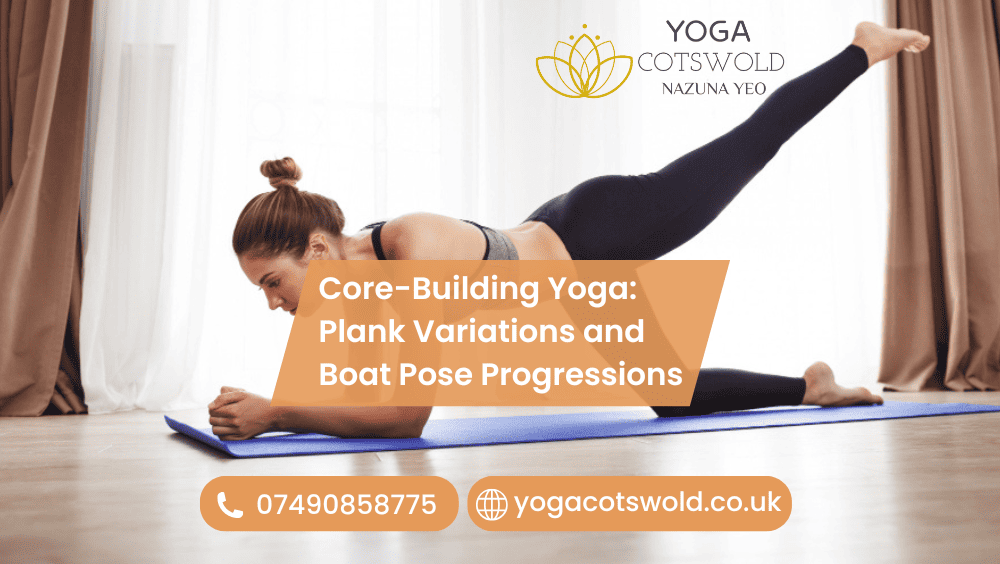
Core-Building Yoga: Plank Variations and Boat Pose Progressions. A strong core does far more than sculpt the midsection. In fact, it supports posture, protects the spine and improves balance in everyday life. At YOGA COTSWOLD, I often remind students that true strength begins deep within the body. Therefore, in this guide, I will explore core-building yoga, focusing on plank variations and boat pose progressions that develop stability safely and progressively.
Whether you are new to yoga or refining your practice, these structured steps will help you build confidence without strain.
Why Core Strength Matters in Yoga
Many people associate core work with sit-ups or gym machines. However, yoga approaches strength differently. Rather than isolating muscles, it integrates breath, alignment and awareness.
The core muscles include:
-
Transverse abdominis
-
Rectus abdominis
-
Obliques
-
Pelvic floor
-
Lower back stabilisers
When these muscles work together, they create balanced support. Consequently, poses feel lighter and more controlled.
Moreover, a strong core improves:
-
Postural alignment
-
Lower back health
-
Balance and coordination
-
Injury prevention
Therefore, investing time in core stability enhances your entire yoga journey.
Foundations First: Engaging the Core Properly
Before attempting advanced poses, you must learn how to activate the deep abdominal muscles correctly.
Step 1: Neutral Spine Awareness
Lie on your back with knees bent. Gently draw the navel towards the spine without holding your breath. Meanwhile, keep the ribcage relaxed.
Step 2: Breath Integration
Inhale deeply. Then, as you exhale, lightly engage the lower abdomen. This subtle activation builds strength gradually.
Importantly, avoid gripping or clenching. Instead, think of lifting and supporting from within.
Part One: Plank Variations for Core Stability
Plank pose remains one of the most effective full-body strengthening postures. However, progression matters. Therefore, let us move step by step.
1. High Plank (Foundation Pose)
High plank builds baseline strength.
How to practise:
-
Place hands beneath shoulders
-
Extend legs back
-
Press firmly through palms
-
Engage thighs and abdomen
Keep the body in one straight line. Meanwhile, breathe steadily.
Common mistake: Dropping the hips. Instead, imagine drawing the front ribs gently inward.
Hold for 20–30 seconds initially. Gradually increase duration as strength improves.
2. Forearm Plank (Deep Core Activation)
Lowering onto the forearms increases intensity. Consequently, the transverse abdominis activates more deeply.
Ensure elbows align beneath shoulders. Furthermore, avoid collapsing through the chest.
Hold for short intervals, resting between repetitions.
3. Side Plank (Oblique Strength)
Side plank challenges lateral stability. Therefore, it strengthens obliques and shoulder stabilisers.
Stack one foot over the other. Alternatively, lower the bottom knee for support.
Lift the hips confidently. Meanwhile, keep the chest open.
4. Plank with Shoulder Taps
This dynamic variation improves coordination.
From high plank:
-
Gently tap opposite shoulder
-
Minimise hip sway
-
Maintain controlled breathing
Because movement increases instability, core engagement becomes essential.
5. Plank Leg Lifts
Lift one leg slowly without arching the lower back. Consequently, glutes and core fire simultaneously.
Alternate sides mindfully.
Related Post:
Part Two: Boat Pose Progressions (Navasana)
After mastering plank variations, we transition to boat pose (Navasana). This seated posture challenges balance and deep abdominal strength.
1. Supported Boat Pose
Begin seated with knees bent and feet on the mat.
Lean slightly back while keeping the spine long. Then lift one foot at a time.
Hold behind thighs if needed. Because stability matters more than aesthetics, use support confidently.
2. Bent-Knee Boat Pose
Lift both feet while keeping knees bent at 90 degrees.
Shins stay parallel to the floor. Meanwhile, chest remains lifted.
Avoid rounding the spine. Instead, broaden the collarbones gently.
3. Full Boat Pose
Extend legs fully, forming a V-shape.
Reach arms forward parallel to the floor.
Although this pose looks simple, it demands strong hip flexors and abdominal control.
Hold briefly, then lower with control.
4. Low Boat Variation
From full boat, lower the torso and legs slightly without touching the floor.
Because this increases intensity, practise shorter holds.
5. Dynamic Boat Pulses
Move between high and low boat slowly.
This controlled transition builds endurance. Furthermore, it strengthens both upper and lower abdominal muscles.
Integrating Plank and Boat into a Flow
Rather than practising poses in isolation, combine them into a short core yoga sequence:
-
High plank – 30 seconds
-
Forearm plank – 20 seconds
-
Side plank (each side) – 20 seconds
-
Bent-knee boat – 20 seconds
-
Low boat – 15 seconds
Rest briefly between rounds.
Repeat two or three cycles depending on energy levels.
Common Mistakes in Core-Building Yoga
Even experienced practitioners sometimes overcompensate. Therefore, watch for these habits:
-
Holding the breath
-
Rounding shoulders
-
Arching the lower back
-
Clenching the jaw
-
Moving too quickly
Instead, prioritise controlled breath and steady alignment.
How Often Should You Practise?
Consistency creates results. However, recovery remains important.
I recommend practising focused core-building yoga two to three times per week. Meanwhile, gentle restorative sessions can fill other days.
At YOGA COTSWOLD, we integrate core work naturally into vinyasa flows. Consequently, strength develops steadily without excessive strain.
Safety Tips from NAZUNA YEO
As your teacher, I encourage mindful progression:
-
Warm up thoroughly
-
Stop if sharp pain arises
-
Modify when fatigued
-
Strengthen gradually
Moreover, remember that yoga builds sustainable strength, not sudden intensity.
Benefits Beyond the Mat
Core strength supports daily life in subtle yet powerful ways.
You may notice:
-
Improved posture at your desk
-
Greater ease lifting objects
-
Enhanced balance during walking
-
Reduced lower back discomfort
Therefore, your practice benefits far more than aesthetic goals.
Conclusion
Building strength takes patience. However, when you approach plank variations and boat pose progressions with awareness, progress feels empowering rather than overwhelming.
At YOGA COTSWOLD, I guide students towards sustainable growth through intelligent sequencing and breath-led movement. Therefore, embrace gradual improvement, honour your body and allow your core strength to develop from within.
With consistent practice and mindful attention, your stability will transform both your yoga practice and your daily life.
Social:
linkedin.com/feed/update/urn:li:share:7432371809011974144?actorCompanyId=106730775


Comments
Post a Comment