Gentle Yoga for Larger Bodies: Props, Modifications & Wins
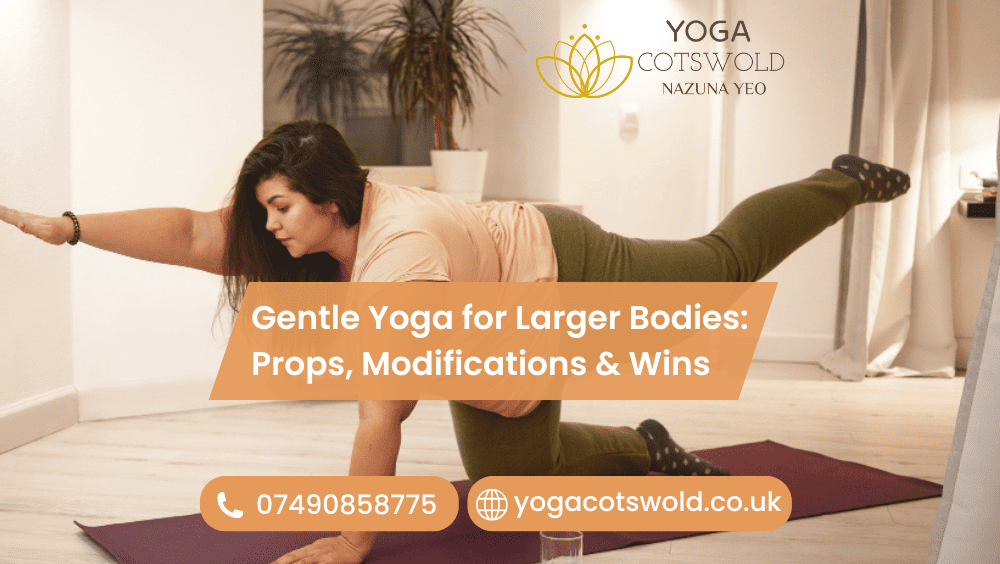
Gentle Yoga for Larger Bodies: Props, Modifications & Wins: Yoga should feel like an invitation, not an instruction manual for shrinking yourself. Yet for many people in larger bodies, stepping onto a mat can come with hesitation, self-doubt, or memories of spaces that felt unwelcoming. At YOGA COTSWOLD, I believe yoga must meet you where you are — not the other way around.
As a yoga teacher, NAZUNA YEO, I have worked with students of many shapes, sizes, and life stages. Over time, I have seen how gentle yoga for larger bodies can be deeply empowering when taught with care, curiosity, and respect. This practice is not about limitation; instead, it is about intelligent choice, comfort, and genuine progress — what I like to call quiet wins.
Redefining Gentle Yoga
Gentle yoga is often misunderstood. Some assume it lacks depth or challenge. However, gentle yoga, especially for larger bodies, requires awareness, creativity, and skilful guidance.
Rather than forcing shapes, gentle yoga focuses on:
-
Joint health
-
Breath awareness
-
Nervous system regulation
-
Sustainable movement
Most importantly, it encourages self-trust. When the body feels safe, it responds with strength.
Why Larger Bodies Deserve Thoughtful Practice
Larger bodies are not a problem to fix. They simply have different proportions, centres of gravity, and ranges of motion. Therefore, teaching yoga without acknowledging this reality can feel dismissive or unsafe.
Because of this, yoga for larger bodies prioritises:
-
Space for the belly, chest, and thighs
-
Reduced pressure on wrists and knees
-
Options that support balance
-
Respect for fatigue and breath capacity
When these needs are honoured, yoga becomes accessible and nourishing.
The Power of Props: Tools, Not Crutches
Props are often seen as optional, yet in inclusive yoga they are essential. At YOGA COTSWOLD, props are presented as intelligent tools that enhance experience rather than correct flaws.
Useful Props for Larger Bodies
-
Yoga blocks to raise the floor closer
-
Bolsters to support the torso and hips
-
Straps to assist reach without strain
-
Blankets for cushioning and warmth
-
Chairs for seated and standing adaptations
Using props allows students to explore poses without compression or discomfort. As a result, confidence grows naturally.
Modifications That Honour the Body
Modifications are not shortcuts. Instead, they are expressions of wisdom. Every body benefits from choice, yet for larger bodies, modifications create essential access.
Common Modifications That Work
-
Wider stances to accommodate hips and belly
-
Elevated hands in forward folds
-
Side-lying rest instead of prone positions
-
Wall support for balance poses
-
Shorter holds with mindful transitions
By offering options early, students feel included rather than singled out.
Breath Before Shape
Breath is often overlooked in physical discussions, yet it is central to gentle yoga. Larger bodies may experience breath restriction when compressed or folded tightly. Therefore, sequencing must respect lung capacity and rib movement.
Practices that support breath include:
-
Upright postures
-
Slow transitions
-
Longer exhalations
-
Pauses for integration
When breath flows freely, movement feels safer and more enjoyable.
Celebrating the Wins That Matter
Yoga progress is rarely dramatic. Instead, it arrives quietly.
Wins might look like:
-
Getting up from the floor with ease
-
Holding a pose comfortably
-
Feeling less self-conscious in class
-
Trusting your body’s signals
-
Leaving practice calmer than you arrived
These victories deserve recognition. In fact, they are the heart of inclusive yoga.
Creating Emotionally Safe Yoga Spaces
Physical accessibility means little without emotional safety. Many students in larger bodies carry previous experiences of judgement, whether spoken or implied.
As a teacher, I prioritise:
-
Neutral, non-shaming language
-
Demonstrating multiple options
-
Avoiding body-centric cues
-
Encouraging rest without explanation
When students feel respected, their relationship with movement transforms.
Gentle Yoga Is Still Powerful
Gentle does not mean passive. Over time, gentle yoga builds:
-
Functional strength
-
Joint resilience
-
Body awareness
-
Emotional regulation
Because the practice is sustainable, students are more likely to continue — and consistency creates change.
Related Articles:
» Why should I do a Personalised One-to-One Yoga?
» Why does yoga help in reducing weight?
» Why Yoga Is Essential for Children’s Physical and Mental Growth?
» How Can Yoga Control Your Back Pain?
» Can Meditation Reduce Anxiety and Stress Naturally?
Why This Approach Matters at YOGA COTSWOLD
At YOGA COTSWOLD, yoga is not about aesthetics. It is about presence, connection, and belonging. My teaching philosophy, as NAZUNA YEO, centres on meeting each student as they are today.
Gentle yoga for larger bodies is not a niche offering. It is a necessary evolution of yoga itself.
Social:
https://www.linkedin.com/feed/update/urn:li:share:7408045902872903680/
https://uk.pinterest.com/pin/1114711345286401274


Comments
Post a Comment